“Misr El Kheir Foundation aims to reach 32,000 sacrificial shares and expand the beneficiary base”
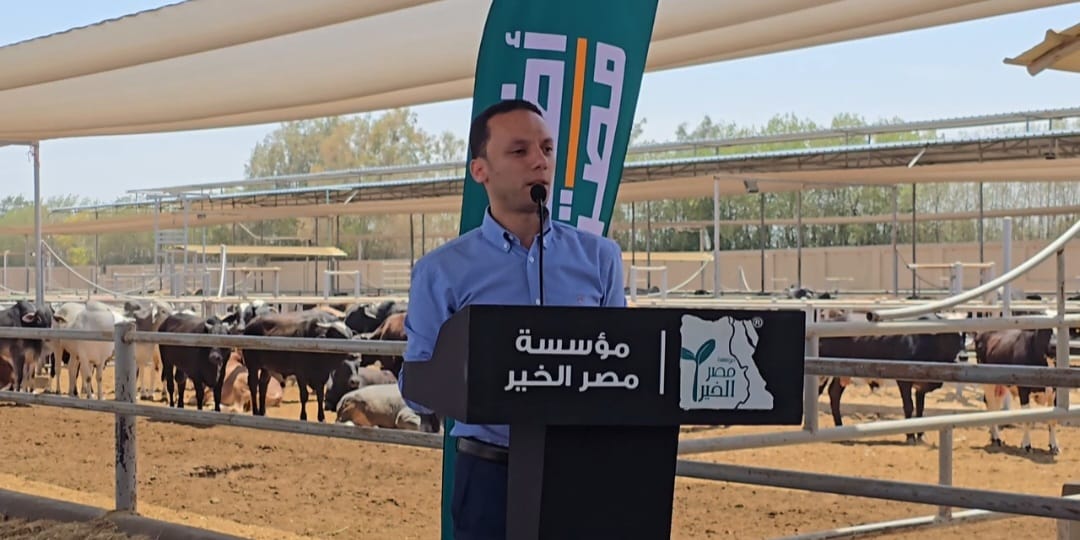
12 May 2026Mahmoud El Masry, Senior Director of Projects and Economic Empowerment and Director of the Sacrificial Share Campaign at Misr El Kheir Foundation, a member of the National Alliance for Civil Development Work, emphasized that quality remains the core principle of the organization’s sacrificial share campaign every year. He noted that over the years, the foundation has become associated with providing high-quality local meat, which has earned donors’ trust and made the campaign one of the leading sacrifice initiatives in Egypt.
He explained that the foundation relies on a fully integrated system that begins with selecting sacrificial livestock from the organization’s farms located across several regions. The animals undergo thorough religious, technical, and veterinary inspections supervised by specialized teams of veterinarians and agricultural engineers to ensure the health of the livestock and the quality of the meat. These preparations begin as early as five to six months before the sacrifice season.
He pointed out that this year’s campaign aims to offer four main products, led by the local sacrificial share priced at 11,900 Egyptian pounds per share. Another offering is the “One Animal in a Village” initiative, which involves slaughtering an entire sacrificial animal within targeted villages and distributing the meat to the most vulnerable families, at a cost of 85,000 pounds.
The foundation also provides “charity meat” products for those unable to afford a full sacrificial share. Donors can contribute a kilogram of charity meat for 480 pounds or support a package including one kilogram of meat, a bottle of oil, and one kilogram of rice for 550 pounds, with the aim of bringing joy to deserving families during Eid al-Adha.
El Masry added that the foundation is committed to maintaining the same quality standards for both the meat distributed to beneficiaries and the portions received by donors. A donor wishing to receive their share gets approximately 9 kilograms of meat starting from the fourth day of Eid, while distribution to eligible families begins on the first day of Eid al-Adha across 27 governorates and various targeted villages and hamlets.
He stressed that quality is not limited to the meat itself but extends to every stage of production, starting from the type of feed and grazing systems to livestock breeding and housing conditions at the foundation’s farms, all the way to controlling fat ratios in the meat according to proper standards to ensure a healthy and safe product. He explained that feed is selected with great care to achieve the best feed conversion rates for the animals, ultimately improving the quality of meat provided to citizens.
He revealed that the foundation aims this year to reach 32,000 sacrificial shares, marking growth compared to previous years. This expansion requires continuously updating databases of eligible families and extending outreach to new villages and hamlets that many donors cannot easily access directly. He also noted that the foundation has a wide network of volunteers and field teams that help reach the most vulnerable groups across different governorates.
He explained that packaging, transportation, and distribution operations are also subject to strict quality standards. Refrigerated transport vehicles are used to preserve the safety and quality of the meat and ensure it reaches beneficiaries and donors in optimal condition. The foundation is continuously working to improve this system in order to reach the largest possible number of families in need.
Regarding veterinary supervision, El Masry confirmed that monitoring is conducted year-round, not only during the sacrifice season. Animals are constantly monitored for diseases or health changes resulting from climate fluctuations, alongside regular vaccination and inspection programs to maintain livestock health. Growth rates and feed conversion are also tracked within the farms to guarantee the highest possible meat quality.
He further noted that the foundation’s sacrifice project is not limited to charitable work but is also connected to economic empowerment initiatives. Many of the livestock raised on the foundation’s farms originally belong to young people and female breadwinners who received them through development programs. These beneficiaries are trained in modern breeding and housing techniques within the foundation’s farms, helping them generate sustainable income and improve their living conditions.
Mahmoud El Masry emphasized that when donors entrust the foundation with carrying out a sacrificial share, they are not only fulfilling a religious duty but also indirectly supporting economic empowerment projects and assisting vulnerable families across Egypt’s governorates.




.png)
.png)
.png)
.png)
