Misr El Kheir, a Member of the National Alliance, Participates in Launching the Second Phase of the “New Hope for Economic Empowerment” Initiative
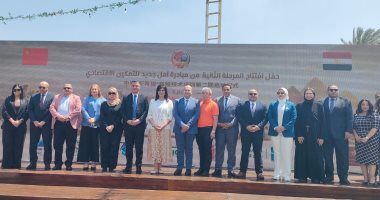
17 June 2026The National Alliance for Civil Development Work and Misr El Kheir Foundation have launched the second phase of the “New Hope for Economic Empowerment” initiative in Giza Governorate, in cooperation with the Embassy of the People's Republic of China in Cairo. The initiative represents a successful Egyptian-Chinese partnership led by the National Alliance, following the remarkable success of the first phase, which achieved a success rate of 96.25% and a beneficiary satisfaction rate of 97%.
The second phase aims to reach six times as many beneficiaries as the first phase and expand the initiative's scope to include six governorates, thereby strengthening economic empowerment efforts for the most vulnerable families and promoting sustainable development based on productivity and employment.
The launch event was attended by Ambassador Nabila Makram, Head of the Technical Secretariat of the National Alliance for Civil Development Work; Chinese Ambassador to Egypt Liao Liqiang; Dr. Ayman Abdel Mawgoud, Permanent Undersecretary of the Ministry of Social Solidarity; Dr. Mohamed Refai, CEO of Misr El Kheir Foundation; Dr. Walaa Gad El Karim, Head of the Central Unit of the “Hayah Karima” Initiative at the Ministry of Local Development; Dr. Ibrahim El Shahaby, Deputy Governor of Giza; as well as representatives of partner organizations and member institutions of the National Alliance.
Ambassador Nabila Makram emphasized that the National Alliance believes economic empowerment is the cornerstone of building a cohesive, productive society capable of addressing economic and social challenges. She noted that a new approach is reshaping the relationship between citizens and the state, transforming citizens from beneficiaries into active partners in the development process.
She added that the “New Hope” initiative is a tangible success story, turning hope into achievements that citizens can directly experience despite various challenges and circumstances. She explained that the National Alliance has overseen planning, implementation, monitoring, and rapid intervention from the outset to ensure the initiative’s success.
Makram expressed her satisfaction with the results of the first phase, stressing that expansion into six governorates will enable a larger number of families to benefit and achieve economic independence.
Dr. Mohamed Refai, CEO of Misr El Kheir Foundation, praised all partners involved. He noted that the first phase brought together three institutions under the umbrella of the National Alliance and helped establish a strong and sustainable partnership with the Chinese side, while also improving the lives of many women through economic empowerment.
He explained that impact assessments conducted by the foundation demonstrated both economic and social gains for beneficiaries. He cited the example of Saqiyat Abu Shaara Village in Monufia Governorate, which recorded the lowest poultry mortality rates, reflecting the initiative’s success.
Refai stressed that the initiative serves as a successful model for integrating the efforts of civil society organizations. He highlighted that the second phase includes the participation of additional institutions and praised the National Alliance’s role in planning, monitoring, and evaluation.
He further noted that moving from a successful pilot phase to broad geographical expansion across six governorates confirms that economic empowerment is the most sustainable path toward improving the quality of life of vulnerable families. He added that Egyptian-Chinese cooperation provides a practical model for joint development, knowledge transfer, and delivering direct benefits to citizens.
Dr. Ibrahim El Shahaby, Deputy Governor of Giza, conveyed the greetings of Engineer Adel El Naggar, Governor of Giza, and expressed his pleasure at the launch of the initiative’s second phase in the governorate. He emphasized the initiative’s importance in improving living standards and supporting target groups.
He pointed out that the achievements of the presidential (Hayah Karima) initiative represent one of the most significant development and reconstruction efforts worldwide, noting that its success has been supported by civil society organizations, led by the National Alliance for Civil Development Work.
El Shahaby also praised Egyptian-Chinese relations across various fields and affirmed Giza Governorate’s full support for the initiative’s activities and objectives.
Meanwhile, Chinese Ambassador to Egypt Liao Liqiang expressed his pleasure at the launch of the second phase, commending the achievements of the first phase and thanking all partner organizations, particularly the Ministry of Social Solidarity, the Ministry of Local Development, the National Alliance, Misr El Kheir Foundation, and Giza Governorate.
He noted that this year marks the 70th anniversary of diplomatic relations between Egypt and China, adding that relations between the two countries have become a model of cooperation and shared development.
The ambassador explained that the second phase aims to support 600 women across six governorates. He stressed that poverty reduction remains a global challenge and highlighted the tangible progress achieved by both Egypt and China in this area. He also praised the “Decent Life” initiative for improving the living standards of millions of citizens.
Dr. Walaa Gad El Karim, Head of the Central Unit of the “Hayah Karima” Initiative at the Ministry of Local Development, affirmed the ministry’s full support for the National Alliance’s programs and activities. He noted that the Alliance’s efforts complement the state’s initiatives to develop rural Egypt.
He explained that the first phase of the “Hayah Karima” initiative included the development of 1,477 villages, and that the National Alliance’s role contributes to improving citizens’ lives, creating job opportunities, empowering women and youth economically, reducing rural migration, and restoring the productive role of Egyptian villages.
He also confirmed the ministry’s support for the second phase of the “New Hope” initiative, given its importance in revitalizing economic activities in rural areas. He noted that it complements the “Productive Village” program that the ministry plans to launch.
In the same context, Dr. Ayman Abdel Mawgoud, Permanent Undersecretary of the Ministry of Social Solidarity, speaking on behalf of Dr. Maya Morsy, Minister of Social Solidarity, stated that the launch of the second phase represents an important model of cooperation between the government, civil society, and international partners, particularly following the success of the first phase.
He added that economic empowerment is one of the most important avenues for investing in human potential. He noted that the strategic partnership between the National Alliance and the Chinese Embassy reflects the depth of the historical relationship between Egypt and China and contributes to poverty reduction efforts and the achievement of sustainable development goals.
He reaffirmed the Ministry of Social Solidarity’s commitment to supporting the initiative and providing all necessary facilities to ensure the success and sustainability of development programs aimed at improving citizens’ lives and promoting economic development, in line with the country's leadership and development priorities.




.png)
.png)
.png)
.png)
